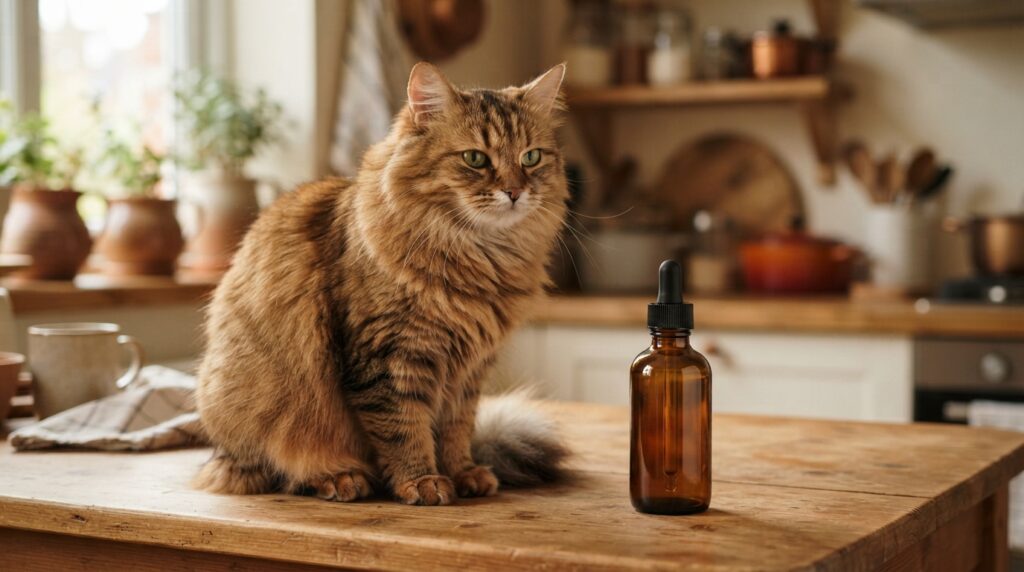
Cats can be sensitive to changes in food, supplements, medications, and daily routines. A product that seems mild for people may affect a cat differently because feline metabolism has specific characteristics. This is one reason careful research matters before adding any new supplement to a cat’s routine. Holistapet CBD Oil for Cats has attracted attention among pet owners who are interested in hemp-derived products, but evidence about its effects in cats remains limited. Understanding what CBD is, what research has found, and what safety questions remain can help owners make more informed decisions.
Understanding CBD and Feline Use
CBD, or cannabidiol, is one of the naturally occurring compounds found in the cannabis plant. Unlike tetrahydrocannabinol (THC), CBD is not considered intoxicating in the same way. Products marketed for pets may contain CBD derived from hemp, along with a carrier oil and other ingredients.
The legal and regulatory situation surrounding pet CBD products can be confusing. In the United States, the U.S. Food and Drug Administration has not approved cannabis, CBD, or THC products for use in animals. The FDA has also stated that it has not approved a cannabis product for any use in animals. That distinction matters because products sold commercially are not automatically equivalent to veterinary medicines that have undergone formal approval.
Research involving cats is also much smaller than research involving humans. A few controlled studies have examined how cats absorb and tolerate CBD, but there is still limited evidence regarding long-term use or whether CBD provides reliable benefits for specific feline conditions.
Why Cats Require Extra Care
Cats process certain substances differently from dogs and humans. Their liver has limited ability to process some compounds through particular metabolic pathways. This does not mean that every CBD product is unsafe, but it does mean that assumptions based on human use or even dog use should be avoided.
A product’s concentration also matters. Two bottles can both contain CBD while providing very different amounts per milliliter. Additional ingredients can create another source of concern.
When examining a CBD product intended for a cat, consider these factors:
- The amount of CBD per serving or milliliter
- Whether the product has been independently tested
- The presence of THC
- The carrier oil and other ingredients
- Clear batch or laboratory information
- Instructions that identify the product as appropriate for animals
- The cat’s existing medications and health conditions
A transparent label should make it possible to determine what is actually inside the bottle. Products with vague ingredient lists deserve more caution.
What Current Research Says
Scientific research on CBD and cats is still developing. A study published in Frontiers in Veterinary Science examined the pharmacokinetics and safety of cannabidiol in healthy cats. The research found that CBD was absorbed by cats, while some animals experienced gastrointestinal effects such as vomiting or diarrhea during the study. The findings helped provide information about how cats handle CBD, but the study did not establish CBD as a treatment for a particular feline disease.
Another area of research involves osteoarthritis and pain-related conditions. Evidence in other animal species has generated interest, but results from dogs cannot automatically be applied to cats. Differences in metabolism, body size, behavior, and study design make direct comparisons unreliable.
This distinction is easy to overlook. A product can have promising laboratory findings without having enough clinical evidence to support a specific medical claim.
Separating Research From Marketing Claims
Pet owners may encounter CBD products promoted for anxiety, pain, inflammation, appetite, sleep, seizures, or general wellness. Some of these claims are based on early research, animal studies, anecdotal reports, or evidence from humans rather than strong feline clinical trials.
A practical way to evaluate a claim is to ask three questions:
- Was the research performed specifically in cats?
- Was the study controlled and published in a scientific or veterinary journal?
- Did the researchers investigate the same condition for which the product is being considered?
If the answer to all three questions is no, the claim should be treated cautiously.
The American Veterinary Medical Association has recognized that research concerning cannabis-derived products in veterinary medicine is still needed. Veterinary organizations have also emphasized the importance of monitoring animals for adverse effects and avoiding unsupported therapeutic claims.
CBD should therefore be viewed as an area of emerging veterinary research rather than an established replacement for conventional treatment.
Choosing a Product With Greater Care
Product selection can be difficult because the pet supplement market includes oils with different concentrations, extraction methods, carrier oils, and labeling practices. A bottle that looks simple may contain several ingredients that are unsuitable for cats.
A useful first step is reading the complete ingredient panel. Avoid relying only on the front label. The back label may reveal flavoring agents, essential oils, sweeteners, or other additives.
Check the Laboratory Information
Independent laboratory testing can provide useful information about product contents. A certificate of analysis, often called a COA, may show the measured cannabinoid concentration and whether contaminants were detected.
A useful COA should correspond to the specific product or batch. It should identify the tested sample and provide measurable results rather than simply displaying a statement that the product was tested.
Common areas examined through laboratory testing include:
- Cannabinoid concentration
- THC concentration
- Heavy metals
- Pesticide residues
- Microbial contamination
- Certain solvents or manufacturing contaminants
Laboratory testing does not prove that a product is medically effective. It provides information about what was found in the tested sample. That difference is important.
Be Careful With THC
THC deserves particular attention because cats can experience adverse effects from cannabis exposure. Signs of cannabis toxicosis in animals can include unusual behavior, impaired coordination, excessive sleepiness, urinary incontinence, dilated pupils, vomiting, or changes in heart rate.
A product labeled “hemp” should not automatically be assumed to contain zero THC. Hemp plants can contain cannabinoids, and finished products can vary depending on cultivation, extraction, formulation, and manufacturing controls.
Any accidental exposure to a cannabis product containing THC should be treated seriously. Veterinary advice is appropriate when a cat may have consumed a product that was not intended for feline use.
Practical Steps Before Use
A conversation with a veterinarian is a sensible starting point, especially when a cat has an ongoing medical problem or receives prescription medication. The veterinarian can review the cat’s medical history and identify possible concerns that may not be obvious from the product label.
Medication interactions are another reason professional guidance matters. CBD can affect enzymes involved in drug metabolism, so combining CBD with certain medicines could potentially alter how those medicines work. The level of risk depends on the individual animal, the medication, the CBD product, and the amount administered.
Keeping a simple record can also make changes easier to evaluate. Record the product name, concentration, amount given, date, time, and any noticeable changes in appetite, digestion, alertness, movement, or behavior. This information can be useful if a veterinarian needs to assess the cat later.
Signs That Need Attention
Cats can hide discomfort, so subtle behavioral changes deserve attention. A cat that suddenly stops eating, becomes unusually quiet, vomits repeatedly, develops diarrhea, or has difficulty walking should not simply be assumed to be adjusting to a supplement.
Possible warning signs after exposure to a cannabinoid product include:
- Excessive sedation
- Poor coordination
- Vomiting or diarrhea
- Changes in urination
- Tremors
- Unusual vocalization
- Marked changes in heart rate or behavior
Severe or rapidly developing symptoms require veterinary attention. If accidental ingestion occurs, provide the veterinarian with the product container or label whenever possible. Knowing the exact ingredients and concentration can make assessment easier.
Looking at the Broader Pet CBD Market
Interest in CBD products has expanded across the pet supplement market, although market estimates differ substantially depending on which products, countries, and sales channels are included. Reports from commercial market research companies commonly describe continued growth in pet CBD interest, but these figures should not be confused with clinical evidence.
Sales numbers show consumer demand. They do not establish whether a product works for a particular medical condition.
The same principle applies to customer reviews. Personal experiences can provide useful information about how a product was perceived, but an individual cat’s response cannot demonstrate that CBD will produce the same result in other animals. Differences in age, weight, diet, genetics, medications, and underlying health conditions can all affect outcomes.
For consumers, the most useful approach is to treat market popularity as a reason to investigate the subject, rather than as proof of effectiveness.
A Sensible Approach for Cat Owners
There is no universal CBD routine that can safely be applied to every cat. Weight alone does not provide enough information to determine an appropriate amount because product concentration, formulation, health status, medications, and the reason for use also matter.
A cautious decision-making process can look like this:
- Identify the reason CBD is being considered.
- Discuss that reason with a veterinarian.
- Review the cat’s current medications and supplements.
- Examine the complete ingredient list.
- Look for reliable batch-specific laboratory testing.
- Check the product’s CBD and THC concentrations.
- Avoid products with unclear formulations.
- Monitor the cat closely for changes after exposure.
- Stop and seek veterinary guidance if concerning symptoms appear.
This approach keeps the focus on the individual cat rather than on general claims made about CBD.
Final Thoughts
CBD remains an emerging area of feline research, with limited evidence and no FDA-approved CBD products for treating medical conditions in cats. Careful product evaluation, veterinary guidance, and close observation are more appropriate than relying on generalized dosage advice or marketing claims.